Marine Carpuat is a computer scientist who works on machine translation and natural language processing. She is known for her research connecting cross-lingual semantics with machine translation. She has been recognized with a NSF Career Award in 2018, a Google Research award in 2016, and Amazon Faculty Awards in 2016 and 2018. == Education == Marine Carpuat obtained her MPhil and PhD from Hong Kong University of Science and Technology in 2008 under the supervision of Dekai Wu. Her PhD thesis was on the topic of machine translation, and demonstrated the first results showing that explicit modeling of lexical semantics could improve the accuracy of a machine translation system. == Career == After completing her education, Carpuat worked at the National Research Council Canada as a researcher. In 2015, she joined University of Maryland as an assistant professor in Computer Science where she is a member of the CLIP lab. Carpuat works in the area of natural language processing with a focus on machine translation and cross-lingual semantics. She has published over 100 peer-reviewed research papers. Her work is published in the proceedings of computer science conferences, including the Annual Meeting of the Association for Computational Linguistics and Empirical Methods in Natural Language Processing. == Selected honors and distinctions == 2016 Google Research Award 2016, 2018 Amazon Research Awards 2018 NSF Career Award
Real-Time UML
Real-Time UML (RTUML) refers to the application of the Unified Modelling Language (UML) for the analysis, design, and implementation of real-time and embedded systems, where timing constraints, concurrency, and resource management are critical. It extends standard UML with profiles, notations, and semantics to handle hard and soft real-time requirements, such as modelling predictable response times and fault tolerance. RTUML is not a separate language but a methodology leveraging UML diagrams (e.g., statecharts, sequence diagrams) for time-sensitive applications like automotive controls, avionics, and medical devices. The term is closely associated with Bruce Powel Douglass, who popularised it through his books and the Harmony process for embedded software development. As of 2025, RTUML remains relevant in industries requiring certified systems, though its adoption varies with agile methodologies and model-driven engineering tools. == Background == Real-Time UML emerged in the late 1990s as UML was standardized by the Object Management Group (OMG) in 1997, addressing the need for object-oriented modeling in real-time systems previously dominated by procedural languages like C. Traditional real-time development relied on "bare metal" programming or theoretical models, but RTUML introduced visual notations for object structure, behaviour, and timing. Bruce Powel Douglass’s 1999 book, Real-Time UML: Developing Efficient Objects for Embedded Systems, formalised the approach, emphasising statecharts for concurrency and timing constraints. Later editions (2004, 2006) incorporated UML 2.0 features like activity and timing diagrams, aligning with OMG’s Real-Time Profile (now part of MARTE—Modelling and Analysis of Real-Time and Embedded Systems). The Harmony process integrates RTUML with executable models for simulation and code generation. RTUML addresses hard real-time systems (e.g., strict deadlines in avionics) versus soft real-time (e.g., media streaming), using UML extensions for schedulability analysis. == Key concepts == RTUML adapts UML diagrams and techniques for real-time needs: Statecharts and Behaviour Modelling: Extended state machines model reactive behaviour, using and-states for concurrency, pseudostates for transitions, and timing constraints (e.g., {duration < 10ms}). Examples include cardiac pacemaker models. Sequence and Interaction Diagrams: Capture message timing, priorities, and resource allocation in multi-threaded systems. Architectural Patterns: Define logical and physical architectures with active objects for concurrency and patterns like observer or publisher-subscriber. Timing and Constraints: Use Object Constraint Language (OCL) for specifying deadlines and priorities. Profiles and Extensions: OMG’s UML Profile for Schedulability, Performance, and Time (SPT) and MARTE add stereotypes like RT::ActiveObject. These support iterative development, from requirements to deployment, often with tools like IBM Rhapsody or Enterprise Architect. == Applications == RTUML is used in: Embedded Systems: Modelling automotive ECUs or UAV controls. Avionics and Defence: DO-178C-compliant designs for fault tolerance. Medical Devices: Pacemakers or ventilators with precise timing. Industrial Automation: RTOS task visualisation via sequence diagrams. Tools like IBM Rhapsody support RTUML for model-based development and code generation in C/C++. == Criticism and adoption == RTUML’s complexity can overwhelm simple systems, and its use in agile environments is limited, where lightweight diagrams are preferred. Surveys indicate UML (including RTUML) is used in 30–50% of embedded projects, often for documentation rather than full model-driven engineering. It remains standard in academia and certified industries like aerospace.
Ubiquitous robot
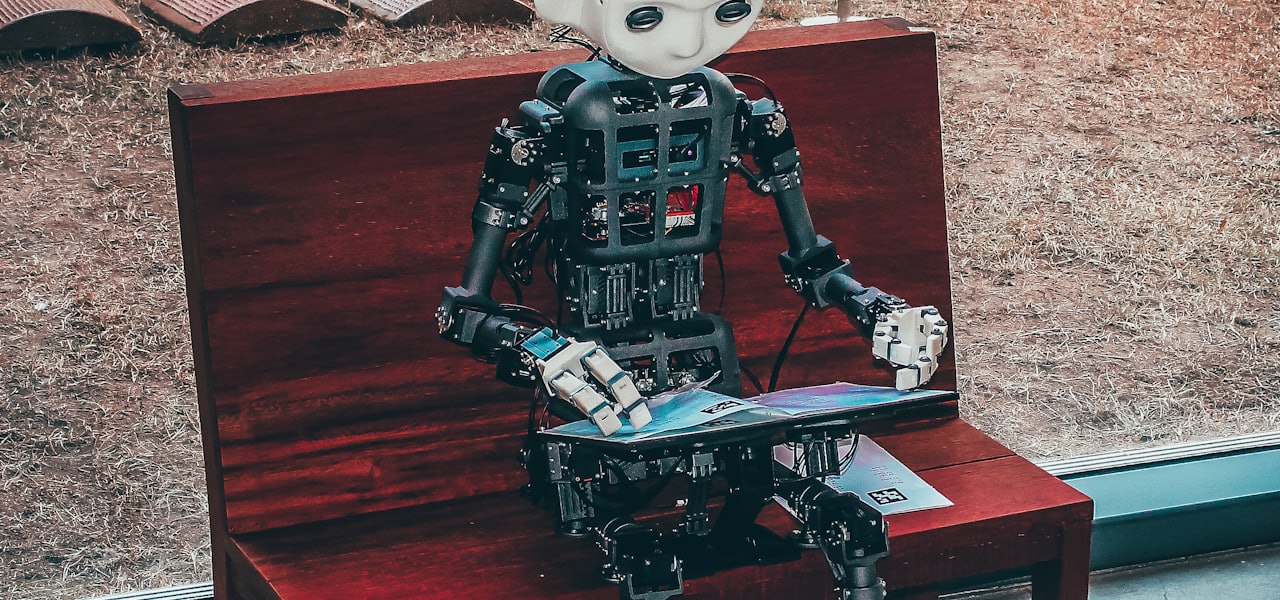
Ubiquitous robot is a term used in an analogous way to ubiquitous computing. Software useful for "integrating robotic technologies with technologies from the fields of ubiquitous and pervasive computing, sensor networks, and ambient intelligence". The emergence of mobile phone, wearable computers and ubiquitous computing makes it likely that human beings will live in a ubiquitous world in which all devices are fully networked. The existence of ubiquitous space resulting from developments in computer and network technology will provide motivations to offer desired services by any IT device at any place and time through user interactions and seamless applications. This shift has hastened the ubiquitous revolution, which has further manifested itself in the new multidisciplinary research area, ubiquitous robotics. It initiates the third generation of robotics following the first generation of the industrial robot and the second generation of the personal robot. Ubiquitous robot (Ubibot) is a robot incorporating three components including virtual software robot or avatar, real-world mobile robot and embedded sensor system in surroundings. Software robot within a virtual world can control a real-world robot as a brain and interact with human beings. Researchers of KAIST, Korea describe these three components as a Sobot (Software robot), Mobot (Mobile robot), and Embot (Embedded robot).
SQL programming tool
In the field of software, SQL programming tools provide platforms for database administrators (DBAs) and application developers to perform daily tasks efficiently and accurately. Database administrators and application developers often face constantly changing environments which they rarely completely control. Many changes result from new development projects or from modifications to existing code, which, when deployed to production, do not always produce the expected result. For organizations to better manage development projects and the teams that develop code, suppliers of SQL programming tools normally provide more than facility to the database administrator or application developer to aid in database management and in quality code-deployment practices. == Features == SQL programming tools may include the following features: === SQL editing === SQL editors allow users to edit and execute SQL statements. They may support the following features: cut, copy, paste, undo, redo, find (and replace), bookmarks block indent, print, save file, uppercase/lowercase keyword highlighting auto-completion access to frequently used files output of query result editing query-results committing and rolling-back transactions inside cut paper === Object browsing === Tools may display information about database objects relevant to developers or to database administrators. Users may: view object descriptions view object definitions (DDL) create database objects enable and disable triggers and constraints recompile valid or invalid objects query or edit tables and views Some tools also provide features to display dependencies among objects, and allow users to expand these dependent objects recursively (for example: packages may reference views, views generally reference tables, super/subtypes, and so on). === Session browsing === Database administrators and application developers can use session browsing tools to view the current activities of each user in the database. They can check the resource-usage of individual users, statistics information, locked objects and the current running SQL of each individual session. === User-security management === DBAs can create, edit, delete, disable or enable user-accounts in the database using security-management tools. DBAs can also assign roles, system privileges, object privileges, and storage-quotas to users. === Debugging === Some tools offer features for the debugging of stored procedures: step in, step over, step out, run until exception, breakpoints, view & set variables, view call stack, and so on. Users can debug any program-unit without making any modification to it, including triggers and object types. === Performance monitoring === Monitoring tools may show the database resources — usage summary, service time summary, recent activities, top sessions, session history or top SQL — in easy-to-read graphs. Database administrators can easily monitor the health of various components in the monitoring instance. Application developers may also make use of such tools to diagnose and correct application-performance problems as well as improve SQL server performance. === Test data === Test data generation tools can populate the database by realistic test data for server or client side testing purposes. Also, this kind of software can upload sample blob files to database.
Timeline of algorithms
The following timeline of algorithms outlines the development of algorithms (mainly "mathematical recipes") since their inception. == Antiquity == Before – writing about "recipes" (on cooking, rituals, agriculture and other themes) c. 1700–2000 BC – Egyptians develop earliest known algorithms for multiplying two numbers c. 1600 BC – Babylonians develop earliest known algorithms for factorization and finding square roots c. 300 BC – Euclid's algorithm c. 200 BC – the Sieve of Eratosthenes 263 AD – Gaussian elimination described by Liu Hui == Medieval Period == 628 – Chakravala method described by Brahmagupta c. 820 – Al-Khawarizmi described algorithms for solving linear equations and quadratic equations in his Algebra; the word algorithm comes from his name 825 – Al-Khawarizmi described the algorism, algorithms for using the Hindu–Arabic numeral system, in his treatise On the Calculation with Hindu Numerals, which was translated into Latin as Algoritmi de numero Indorum, where "Algoritmi", the translator's rendition of the author's name gave rise to the word algorithm (Latin algorithmus) with a meaning "calculation method" c. 850 – cryptanalysis and frequency analysis algorithms developed by Al-Kindi (Alkindus) in A Manuscript on Deciphering Cryptographic Messages, which contains algorithms on breaking encryptions and ciphers c. 1025 – Ibn al-Haytham (Alhazen), was the first mathematician to derive the formula for the sum of the fourth powers, and in turn, he develops an algorithm for determining the general formula for the sum of any integral powers c. 1400 – Ahmad al-Qalqashandi gives a list of ciphers in his Subh al-a'sha which include both substitution and transposition, and for the first time, a cipher with multiple substitutions for each plaintext letter; he also gives an exposition on and worked example of cryptanalysis, including the use of tables of letter frequencies and sets of letters which can not occur together in one word == Before 1940 == 1540 – Lodovico Ferrari discovered a method to find the roots of a quartic polynomial 1545 – Gerolamo Cardano published Cardano's method for finding the roots of a cubic polynomial 1614 – John Napier develops method for performing calculations using logarithms 1671 – Newton–Raphson method developed by Isaac Newton 1690 – Newton–Raphson method independently developed by Joseph Raphson 1706 – John Machin develops a quickly converging inverse-tangent series for π and computes π to 100 decimal places 1768 – Leonhard Euler publishes his method for numerical integration of ordinary differential equations in problem 85 of Institutiones calculi integralis 1789 – Jurij Vega improves Machin's formula and computes π to 140 decimal places, 1805 – FFT-like algorithm known by Carl Friedrich Gauss 1842 – Ada Lovelace writes the first algorithm for a computing engine 1903 – A fast Fourier transform algorithm presented by Carle David Tolmé Runge 1918 - Soundex 1926 – Borůvka's algorithm 1926 – Primary decomposition algorithm presented by Grete Hermann 1927 – Hartree–Fock method developed for simulating a quantum many-body system in a stationary state. 1934 – Delaunay triangulation developed by Boris Delaunay 1936 – Turing machine, an abstract machine developed by Alan Turing, with others developed the modern notion of algorithm. == 1940s == 1942 – A fast Fourier transform algorithm developed by G.C. Danielson and Cornelius Lanczos 1945 – Merge sort developed by John von Neumann 1947 – Simplex algorithm developed by George Dantzig == 1950s == 1950 – Hamming codes developed by Richard Hamming 1952 – Huffman coding developed by David A. Huffman 1953 – Simulated annealing introduced by Nicholas Metropolis 1954 – Radix sort computer algorithm developed by Harold H. Seward 1964 – Box–Muller transform for fast generation of normally distributed numbers published by George Edward Pelham Box and Mervin Edgar Muller. Independently pre-discovered by Raymond E. A. C. Paley and Norbert Wiener in 1934. 1956 – Kruskal's algorithm developed by Joseph Kruskal 1956 – Ford–Fulkerson algorithm developed and published by R. Ford Jr. and D. R. Fulkerson 1957 – Prim's algorithm developed by Robert Prim 1957 – Bellman–Ford algorithm developed by Richard E. Bellman and L. R. Ford, Jr. 1959 – Dijkstra's algorithm developed by Edsger Dijkstra 1959 – Shell sort developed by Donald L. Shell 1959 – De Casteljau's algorithm developed by Paul de Casteljau 1959 – QR factorization algorithm developed independently by John G.F. Francis and Vera Kublanovskaya 1959 – Rabin–Scott powerset construction for converting NFA into DFA published by Michael O. Rabin and Dana Scott == 1960s == 1960 – Karatsuba multiplication 1961 – CRC (Cyclic redundancy check) invented by W. Wesley Peterson 1962 – AVL trees 1962 – Quicksort developed by C. A. R. Hoare 1962 – Bresenham's line algorithm developed by Jack E. Bresenham 1962 – Gale–Shapley 'stable-marriage' algorithm developed by David Gale and Lloyd Shapley 1964 – Heapsort developed by J. W. J. Williams 1964 – multigrid methods first proposed by R. P. Fedorenko 1965 – Cooley–Tukey algorithm rediscovered by James Cooley and John Tukey 1965 – Levenshtein distance developed by Vladimir Levenshtein 1965 – Cocke–Younger–Kasami (CYK) algorithm independently developed by Tadao Kasami 1965 – Buchberger's algorithm for computing Gröbner bases developed by Bruno Buchberger 1965 – LR parsers invented by Donald Knuth 1966 – Dantzig algorithm for shortest path in a graph with negative edges 1967 – Viterbi algorithm proposed by Andrew Viterbi 1967 – Cocke–Younger–Kasami (CYK) algorithm independently developed by Daniel H. Younger 1968 – A graph search algorithm described by Peter Hart, Nils Nilsson, and Bertram Raphael 1968 – Risch algorithm for indefinite integration developed by Robert Henry Risch 1969 – Strassen algorithm for matrix multiplication developed by Volker Strassen == 1970s == 1970 – Dinic's algorithm for computing maximum flow in a flow network by Yefim (Chaim) A. Dinitz 1970 – Knuth–Bendix completion algorithm developed by Donald Knuth and Peter B. Bendix 1970 – BFGS method of the quasi-Newton class 1970 – Needleman–Wunsch algorithm published by Saul B. Needleman and Christian D. Wunsch 1972 – Edmonds–Karp algorithm published by Jack Edmonds and Richard Karp, essentially identical to Dinic's algorithm from 1970 1972 – Graham scan developed by Ronald Graham 1972 – Red–black trees and B-trees discovered 1973 – RSA encryption algorithm discovered by Clifford Cocks 1973 – Jarvis march algorithm developed by R. A. Jarvis 1973 – Hopcroft–Karp algorithm developed by John Hopcroft and Richard Karp 1974 – Pollard's p − 1 algorithm developed by John Pollard 1974 – Quadtree developed by Raphael Finkel and J.L. Bentley 1975 – Genetic algorithms popularized by John Holland 1975 – Pollard's rho algorithm developed by John Pollard 1975 – Aho–Corasick string matching algorithm developed by Alfred V. Aho and Margaret J. Corasick 1975 – Cylindrical algebraic decomposition developed by George E. Collins 1976 – Salamin–Brent algorithm independently discovered by Eugene Salamin and Richard Brent 1976 – Knuth–Morris–Pratt algorithm developed by Donald Knuth and Vaughan Pratt and independently by J. H. Morris 1977 – Boyer–Moore string-search algorithm for searching the occurrence of a string into another string. 1977 – RSA encryption algorithm rediscovered by Ron Rivest, Adi Shamir, and Len Adleman 1977 – LZ77 algorithm developed by Abraham Lempel and Jacob Ziv 1977 – multigrid methods developed independently by Achi Brandt and Wolfgang Hackbusch 1978 – LZ78 algorithm developed from LZ77 by Abraham Lempel and Jacob Ziv 1978 – Bruun's algorithm proposed for powers of two by Georg Bruun 1979 – Khachiyan's ellipsoid method developed by Leonid Khachiyan 1979 – ID3 decision tree algorithm developed by Ross Quinlan == 1980s == 1980 – Brent's Algorithm for cycle detection Richard P. Brendt 1981 – Quadratic sieve developed by Carl Pomerance 1981 – Smith–Waterman algorithm developed by Temple F. Smith and Michael S. Waterman 1983 – Simulated annealing developed by S. Kirkpatrick, C. D. Gelatt and M. P. Vecchi 1983 – Classification and regression tree (CART) algorithm developed by Leo Breiman, et al. 1984 – LZW algorithm developed from LZ78 by Terry Welch 1984 – Karmarkar's interior-point algorithm developed by Narendra Karmarkar 1984 – ACORN PRNG discovered by Roy Wikramaratna and used privately 1985 – Simulated annealing independently developed by V. Cerny 1985 – Car–Parrinello molecular dynamics developed by Roberto Car and Michele Parrinello 1985 – Splay trees discovered by Sleator and Tarjan 1986 – Blum Blum Shub proposed by L. Blum, M. Blum, and M. Shub 1986 – Push relabel maximum flow algorithm by Andrew Goldberg and Robert Tarjan 1986 – Barnes–Hut tree method developed by Josh Barnes and Piet Hut for fast approximate simulation of n-body problems 1987 – Fast multipole method developed by Leslie Greengard and Vladimir
Application-release automation
Application-release automation (ARA) refers to the process of packaging and deploying an application or update of an application from development, across various environments, and ultimately to production. ARA solutions must combine the capabilities of deployment automation, environment management and modeling, and release coordination. == Relationship with DevOps == ARA tools help cultivate DevOps best practices by providing a combination of automation, environment modeling and workflow-management capabilities. These practices help teams deliver software rapidly, reliably and responsibly. ARA tools achieve a key DevOps goal of implementing continuous delivery with a large quantity of releases quickly. == Relationship with deployment == ARA is more than just software-deployment automation – it deploys applications using structured release-automation techniques that allow for an increase in visibility for the whole team. It combines workload automation and release-management tools as they relate to release packages, as well as movement through different environments within the DevOps pipeline. ARA tools help regulate deployments, how environments are created and deployed, and how and when releases are deployed. == ARA Solutions == All ARA solutions must include capabilities in automation, environment modeling, and release coordination. Additionally, the solution must provide this functionality without reliance on other tools.
In-place algorithm
In computer science, an in-place algorithm is an algorithm that operates directly on the input data structure without requiring extra space proportional to the input size. In other words, it modifies the input in place, without creating a separate copy of the data structure. An algorithm which is not in-place is sometimes called not-in-place or out-of-place. In-place can have slightly different meanings. In its strictest form, the algorithm can only have a constant amount of extra space, counting everything including function calls and pointers. However, this form is very limited as simply having an index to a length n array requires O(log n) bits. More broadly, in-place means that the algorithm does not use extra space for manipulating the input but may require a small though non-constant extra space for its operation. Usually, this space is O(log n), though sometimes anything in o(n) is allowed. Note that space complexity also has varied choices in whether or not to count the index lengths as part of the space used. Often, the space complexity is given in terms of the number of indices or pointers needed, ignoring their length. In this article, we refer to total space complexity (DSPACE), counting pointer lengths. Therefore, the space requirements here have an extra log n factor compared to an analysis that ignores the lengths of indices and pointers. An algorithm may or may not count the output as part of its space usage. Since in-place algorithms usually overwrite their input with output, no additional space is needed. When writing the output to write-only memory or a stream, it may be more appropriate to only consider the working space of the algorithm. In theoretical applications such as log-space reductions, it is more typical to always ignore output space (in these cases it is more essential that the output is write-only). == Examples == Given an array a of n items, suppose we want an array that holds the same elements in reversed order and to dispose of the original. One seemingly simple way to do this is to create a new array of equal size, fill it with copies from a in the appropriate order and then delete a. function reverse(a[0..n - 1]) allocate b[0..n - 1] for i from 0 to n - 1 b[n − 1 − i] := a[i] return b Unfortunately, this requires O(n) extra space for having the arrays a and b available simultaneously. Also, allocation and deallocation are often slow operations. Since we no longer need a, we can instead overwrite it with its own reversal using this in-place algorithm which will only need constant number (2) of integers for the auxiliary variables i and tmp, no matter how large the array is. function reverse_in_place(a[0..n-1]) for i from 0 to floor((n-2)/2) tmp := a[i] a[i] := a[n − 1 − i] a[n − 1 − i] := tmp As another example, many sorting algorithms rearrange arrays into sorted order in-place, including: bubble sort, comb sort, selection sort, insertion sort, heapsort, and Shell sort. These algorithms require only a few pointers, so their space complexity is O(log n). Quicksort operates in-place on the data to be sorted. However, quicksort requires O(log n) stack space pointers to keep track of the subarrays in its divide and conquer strategy. Consequently, quicksort needs O(log2 n) additional space. Although this non-constant space technically takes quicksort out of the in-place category, quicksort and other algorithms needing only O(log n) additional pointers are usually considered in-place algorithms. Most selection algorithms are also in-place, although some considerably rearrange the input array in the process of finding the final, constant-sized result. Some text manipulation algorithms such as trim and reverse may be done in-place. == In computational complexity == In computational complexity theory, the strict definition of in-place algorithms includes all algorithms with O(1) space complexity, the class DSPACE(1). This class is very limited; it equals the regular languages. In fact, it does not even include any of the examples listed above. Algorithms are usually considered in L, the class of problems requiring O(log n) additional space, to be in-place. This class is more in line with the practical definition, as it allows numbers of size n as pointers or indices. This expanded definition still excludes quicksort, however, because of its recursive calls. Identifying the in-place algorithms with L has some interesting implications; for example, it means that there is a (rather complex) in-place algorithm to determine whether a path exists between two nodes in an undirected graph, a problem that requires O(n) extra space using typical algorithms such as depth-first search (a visited bit for each node). This in turn yields in-place algorithms for problems such as determining if a graph is bipartite or testing whether two graphs have the same number of connected components. == Role of randomness == In many cases, the space requirements of an algorithm can be drastically cut by using a randomized algorithm. For example, if one wishes to know if two vertices in a graph of n vertices are in the same connected component of the graph, there is no known simple, deterministic, in-place algorithm to determine this. However, if we simply start at one vertex and perform a random walk of about 20n3 steps, the chance that we will stumble across the other vertex provided that it is in the same component is very high. Similarly, there are simple randomized in-place algorithms for primality testing such as the Miller–Rabin primality test, and there are also simple in-place randomized factoring algorithms such as Pollard's rho algorithm. == In functional programming == Functional programming languages often discourage or do not support explicit in-place algorithms that overwrite data, since this is a type of side effect; instead, they only allow new data to be constructed. However, good functional language compilers will often recognize when an object very similar to an existing one is created and then the old one is thrown away, and will optimize this into a simple mutation "under the hood". Note that it is possible in principle to carefully construct in-place algorithms that do not modify data (unless the data is no longer being used), but this is rarely done in practice.